
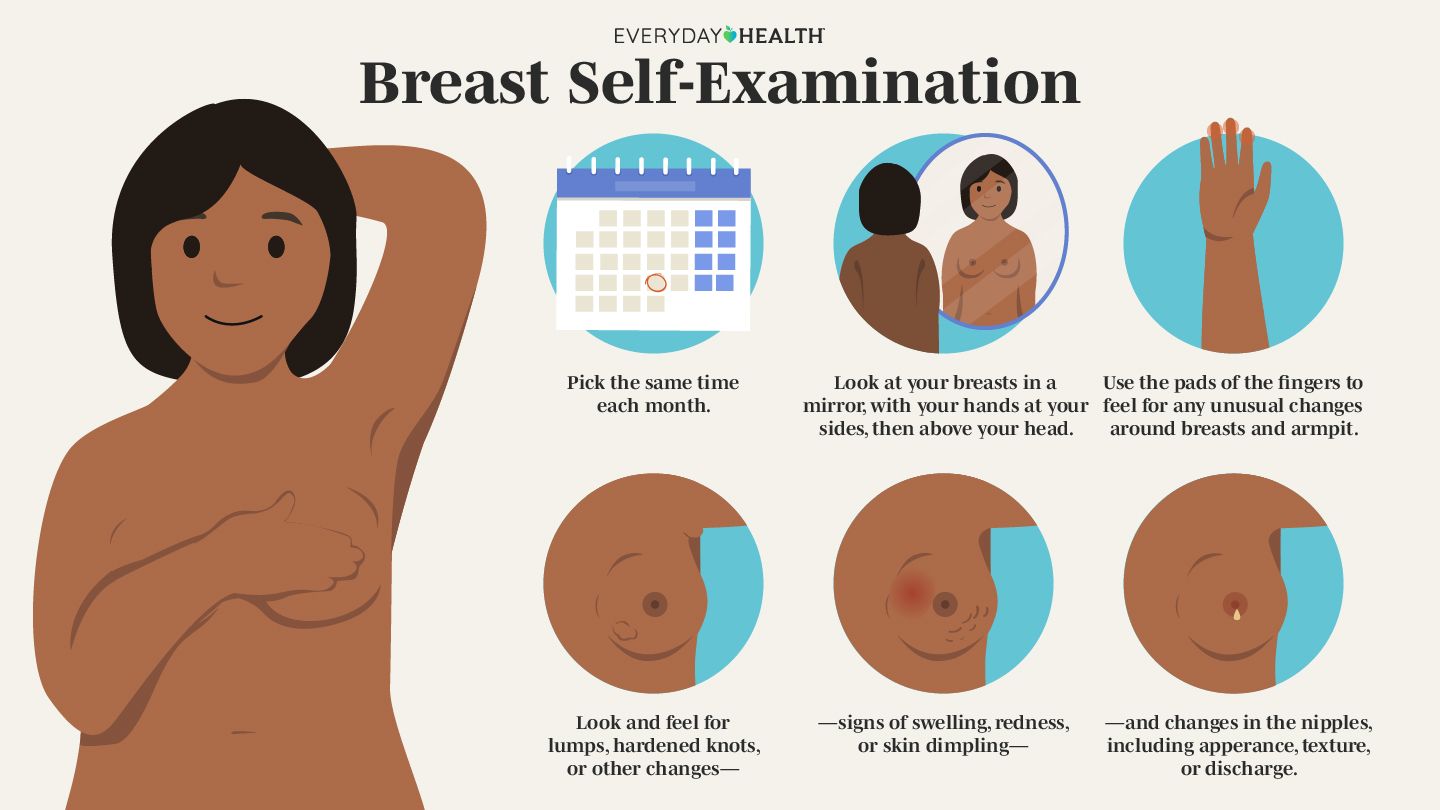
A breast self-exam (BSE) is a way for you to examine your breasts for breast cancer and find out if you have any of the 5 warning signs. This method has been around for years, and studies have found it to be just as effective as professional exams. The trick is to be consistent in your approach each time you do it.
At the risk of sounding like a state-funded cancer awareness campaign, breast cancer is one of those things that’s always best to check on. We’re not saying you should be pulling your boobs out and checking them on a monthly basis, but there are simple checks you can do that could potentially save your life.
What Are The 5 Warning Signs Of Breast Cancer?
The most common way you can find out if you have breast cancer is to examine your breasts. But how can you know if something is seriously wrong? 5 warning signs that you may need to see doctor are:
1. A lump or thickening in the breast, armpit or around the nipple
2. A change in the size or shape of your breast
3. An indentation that does not go away
4. Loss of skin elasticity
5. Redness or flaky rash (looks like dandruff)
It is important to understand the warning signs of breast cancer in order to make a timely diagnosis. If you or someone around you has any of these symptoms, see a doctor immediately.

How To Do A Breast Cancer Self Exam
Breast self-exams are a way to check your breasts for cancer at home. You may want to do a breast self-exam every month or so starting in your 20s. If you have any risk factors for breast cancer, talk to your doctor about how often you should check yourself and when you should start.
To do a breast self-exam, follow these steps:
Step 1: Stand in front of a mirror with your shoulders straight and your arms on your hips. Look for any changes in the shape of your breasts such as swelling, dimpling, or changes in the nipples. Also look for any signs of fluid coming out of one or both nipples (this could be a watery, milky, or yellow fluid or blood).
Step 2: Raise your arms and look for the same changes.
Step 3: While lying down, use your right hand to feel your left breast and then your left hand to feel your right breast. Use a firm, smooth touch with the first few fingers of your hand, keeping the fingers flat and together. Use a circular motion, about the size of a quarter. Cover the entire breast from top to bottom, side to side — from your collarbone to the top of your abdomen, and
Some signs of breast cancer are the same for most women: dimpling in the skin, change in size or shape of the breast, nipple discharge. But there are also some symptoms that are unique to certain groups.
Dense breasts. If your breasts feel dense, you may be at higher risk for cancer. Researchers have found that women with dense breasts have a four to five times higher risk of breast cancer than women with fat-filled breasts. The reason isn’t clear, but it’s likely because dense tissue makes it harder to see tumors on a mammogram.
PMS and breast pain. Women often have breast pain before their period starts. But if you have breast pain that isn’t related to your cycle or that doesn’t go away after your period ends, it could be cancer. It’s especially concerning if the pain is in one spot and doesn’t change with your menstrual cycle.
You’re under 40, and you’ve had more than five drinks a week for several years. Studies show that alcohol, especially more than five drinks a week, can increase your risk of developing breast cancer at any age — even if you’re under 40. A drink is 12 ounces of beer, 5 ounces of wine, or 1½ ounces of hard liquor (such as gin
Of the over two hundred thousand women projected to be diagnosed with invasive breast cancer in 2022, according to American Cancer Society estimates. While awareness has increased, more than 80 percent of women — and men — say they don’t know enough about their risk of breast cancer.
Summary on how to check for breast cancer
No one wants cancer, but most of us have lost a friend or family member to it. Cancer.org estimates that 1.9 million new cancer cases diagnosed in 2021 and 608,570 cancer deaths in the United States alone.
With breast cancer being the second deadliest cancer for women, it is important to know about its warning signs and risk factors. It is for this reason that regular checkups are necessary to ensure early detection.


